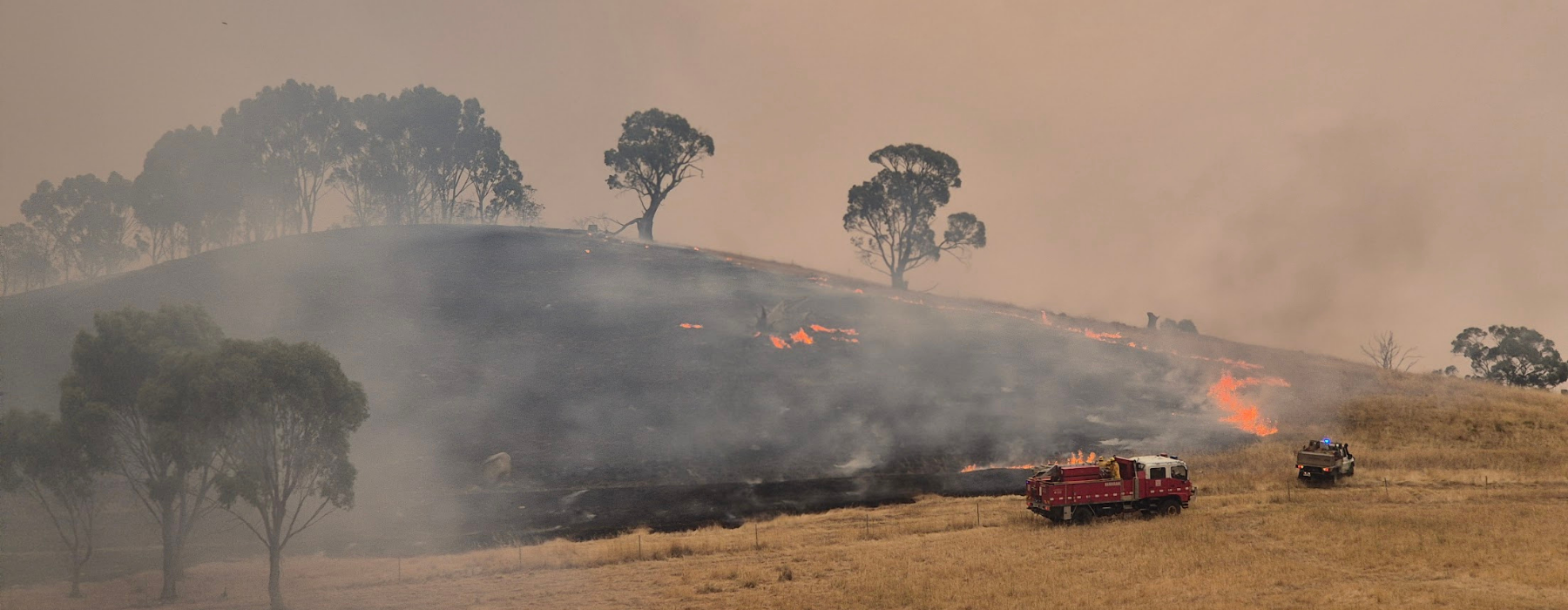
Yes. Australians are already paying for the growing costs of climate change through rising insurance premiums, food prices, and inflation, as well as the direct costs when disasters hit homes and communities.
Disaster costs
Disasters already cost Australia around $38 billion a year – or around $3,800 per household on average. This is projected to reach at least $73 billion a year by 2060 in a low-emissions scenario, and $94 billion under a high-emissions scenario (source).
Insurance
In 2025 alone, extreme weather generated almost $3.5 billion in insured losses from 264,000 claims (source). In 2024, 15% of Australian households were experiencing home insurance affordability stress (source) meaning premiums cost more than four weeks annual income, with climate-related risks contributing to rising premiums (source). That’s up from 10% just two years earlier.
Food prices and inflation
Research from The Australia Institute found that disrupted food production from heat, floods and other extreme weather is contributing to higher food prices. Together, rising food and insurance costs accounted for more than a fifth of Australian inflation between 2022 and early 2025 (source).
The question is: why should ordinary Australians keep picking up the bill while big coal, oil, and gas corporations are making billions in profit, paying very little tax, and getting generous subsidies?
Yes. Scientists can now estimate how much climate change contributed to particular extreme weather events and trace that contribution back to the emissions associated with major coal, oil, and gas producers. This is known as climate attribution science.
The Australian National University has developed the Carbon Impacts Tracer which visualises the connection between climate pollution from specific fossil fuel projects or companies and their attributable climate impacts using peer-reviewed scientific relationships. For example, using the Carbon Impacts Tracer, we can see that pollution over the lifetime of Adani's Carmichael coal mine will lead to 2,628 additional heat related deaths in Europe, and an additional 248,000 people in extreme poverty.
A major 2025 Nature study examined 213 damaging heatwaves around the world and found climate change made every one more intense and more likely. About a quarter would have been virtually impossible without human-caused climate change. The researchers were also able to quantify how much individual major polluters contributed to those events (source).
The evidence is increasingly strong that the pollution produced by big coal, oil, and gas corporations has measurably contributed to the worsening bushfires, floods, and storms our communities are now paying for.
Polluter Pays bills have been introduced in more than 12 US states and adopted in both Vermont and New York State.
The Polluter Pays principle was first formulated in 1972 by the OECD, and stated as a general rule that member nations should “not assist the polluters in bearing the costs of pollution control, whether by means of subsidies, tax advantages or other measures” (source).
There are already numerous precedents for a Polluter Pays principle in NSW and Commonwealth laws, including industry-wide levies that exist to ensure the public doesn’t pay for environmental liabilities caused by private corporations.
It makes sense that these laws should be extended to apply the Polluter Pays principle to the coal, oil, and gas corporations that are causing climate pollution and driving the extreme weather that is already costing communities and families.
The proposal targets the corporations responsible for three-quarters of Australia’s climate pollution – large coal, oil, and gas extraction and export companies.
Globally, just 57 fossil fuel corporations are responsible for around 80% of industrial emissions since the Paris Agreement, showing how concentrated the contribution is (source).
In Australia, major fossil fuel companies such as BHP, Woodside, Santos and Whitehaven Coal are among those producing large amounts of climate pollution through extraction and export.
The levy would focus on large polluting companies, especially those extracting coal, oil, and gas for export, which account for the majority of emissions associated with Australia’s energy sector.
These corporations make billions in profits while the costs of climate disasters are currently borne by communities and governments.
Coal, oil, and gas corporations contribute far less in taxes and royalties than you might expect while also receiving billions of dollars in government support. In fact, nurses pay more tax than gas and oil companies (source).
In 2025–26, Australian governments provided $16.3 billion in subsidies and tax concessions to coal, oil, and gas companies, up 9.4% in just one year – that equates to more than $30,000 per minute. The largest contribution was the Fuel Tax Credit Scheme, which cost $10.8 billion (source).
The gas industry receives particularly generous treatment. 56% of Australia’s gas exports pay no royalties, meaning companies can extract and export an Australian public resource without paying royalties for it (source).
Many multinational corporations are selling billions of dollars worth of Australia’s resources while paying no tax. For example, an analysis of ATO data found that Santos paid no company tax for ten consecutive years despite nearly $47 billion in sales (source).
These corporations make billions from Australia’s resources. Asking the biggest polluters to contribute more towards the climate damage communities are already paying for is a fair ask.
The focus of the proposal is on coal, oil, and gas export corporations because burning these fuels is the primary driver of climate pollution.
These industries are also responsible for large amounts of exported emissions, making Australia one of the world’s top 3 exporters of fossil fuel pollution.
Because of this, the levy would primarily target companies extracting and exporting coal, oil, and gas rather than all mining companies.
Other mining sectors may still need strong environmental regulation, but the polluter pays framework focuses on the industries most responsible for climate damage.
Between 2019 and 2023, 434 of Australia’s 537 councils were impacted by disasters, made more frequent and severe by climate change (source).
Research shows that the costs of climate change are rising rapidly, while council budgets are growing slowly. Without additional funding, councils across the country will be forced to cut spending on services and infrastructure, or raise rates and special levies (source).
As a result of pollution-driven climate disasters, Councils are already dealing with:
- flood and storm damage to roads and infrastructure
- rising disaster recovery costs
- water infrastructure upgrades
- increasing insurance premiums
- growing pressure on emergency response and community services
Community campaigns are working with local councils to call on the federal government to create a Climate Compensation Fund paid for by a Climate Pollution Levy on coal, oil, and gas export corporations – so that the costs of climate change don’t keep falling on ratepayers and taxpayers.
Local councils regularly advocate to state and federal governments on issues affecting their communities.
Councils can table and pass a Motion that would:
- Support the creation of a national Climate Compensation Fund;
- Call on big coal and gas export corporations to pay their fair share;
- Advocate for funding to flow directly to communities and local councils for disaster recovery and climate preparedness;
- And, work together through the Australian Local Government Association to add the Climate Compensation Fund to their national policy platform so that all councils advocate with one voice to the federal government to make the policy a reality.
By passing motions together, councils can send a strong message to the federal government: communities should not be left to pay the rising costs of climate change alone – big polluting corporations must contribute their fair share.
No. The proposal is designed so that big coal, oil, and gas export corporations pay the levy – not households. These are companies that sell our resources off-shore, not companies that provide domestic electricity.
The Make Big Polluters Pay report specifically recommends regulatory measures to prevent corporations from passing on costs through energy prices, including price monitoring by regulators and support for low-income households.
In fact, the current system already drives up costs for ordinary people. Climate disasters are costing Australia around $38 billion per year – around $3,800 per household – increasing insurance premiums, food prices, and household bills (source).
Right now, communities and governments are paying those costs while big coal, oil, and gas corporations make billions in profits. A polluter pays approach shifts those costs back onto the corporations responsible for the pollution in the first place.
Climate change and global energy shifts are already transforming energy markets, and communities that rely on coal, oil, and gas need investment to diversify their economies.
A Climate Compensation Fund is designed to support workers and communities through the energy transition. One of the proposed funding streams is specifically for a just transition for workers and their families, including new jobs, retraining, and regional economic development. Find out more in The Make Big Polluters Pay report.
Without a plan like this, workers are at greater risk. A polluter pays approach ensures the corporations that have made billions from extracting and selling our resources contribute to funding that transition, rather than leaving workers and regional communities to bear the cost alone.
A Climate Compensation Fund would collect revenue from a levy on major coal, oil, and gas export corporations and distribute it to communities facing the impacts of climate change.
The Make Polluters Pay report proposes that the levy could raise around $46 billion per year, reflecting the scale of the damage caused by climate pollution.
Funds could support:
- Disaster recovery and rebuilding
- Climate-resilient infrastructure
- Support for households facing rising insurance and energy costs
- A just transition for workers
- International climate finance for Pacific neighbours
- Long-term climate adaptation and resilience programs
There would be a dedicated funding stream for councils to manage growing adaptation and emergency management costs. The fund would also be developed in consultation with affected communities and could include dedicated funding streams for First Nations communities and those most vulnerable to climate impacts.
The principle is simple: if corporations profit from activities that cause climate damage, they should help pay to fix it.
Equity must be built into the design of the fund from the start. The Make Polluters Pay proposal includes dedicated funding streams for communities most impacted by climate change, including Aboriginal and Torres Strait Islander communities and disaster-affected regions.
For example, the report proposes an Aboriginal and Torres Strait Islander Climate Self-Determination Fund, owned and controlled by First Nations communities.
Funding decisions should prioritise:
- communities facing the highest climate risks
- those with the least resources to respond
- communities already experiencing disaster impacts
No. A levy increases the cost of polluting activities, which creates a strong financial incentive for companies to transition to cleaner energy. In practice, making polluting energy reflect its true social and environmental cost makes renewable energy even more cost effective by comparison, and speeds up the shift to cheaper, cleaner alternatives.
No. The levy would be designed to remain stable even as fossil fuels are phased out. One way to do this is by increasing the levy each year by a pre-determined minimum, ensuring the Climate Pollution Levy continues to generate consistent funding while coal and gas production declines.
The scale of the fund also matters. The aim is to set the levy high enough that fossil fuel companies are effectively paying into a long-term wind-down fund. Australia will need enormous investment – potentially on the scale of a trillion dollars – to support the energy transition, build climate resilience in our communities, and to respond when disasters hit.
Our network supports calls for the 25% tax on gas exports. Winning it would be a big step in the right direction, both for gas corporations paying their fair share, and to support the broader cost of living crisis being felt by ordinary Australians.
There are key differences between the 25% tax on gas exports and what we’re calling for as part of a Climate Compensation Fund:
| Climate Pollution Levy on coal, oil, and gas exports | 25% tax on gas exports only |
| Raising $46 billion per year | Raising $17 billion per year |
| Goes into a Climate Compensation Fund earmarked for local councils, support for households, support for workers and communities on the frontline of the energy transition, support for First Nations communities and Pacific communities. | Goes into general government revenue |
No. A Climate Compensation Fund financed by a levy on big coal, oil, and gas export corporations is different from a broad carbon tax that applies across the economy. The proposal focuses specifically on the largest corporations most responsible for climate pollution and ensures the money raised is directed to communities dealing with the impacts of climate change.
The goal is to make corporations that profit from extracting and exporting coal, oil, and gas contribute to the costs their pollution creates – such as disaster recovery, climate adaptation, and rising insurance costs – rather than leaving households and governments to pay the bill.
Importantly, the funds raised would be earmarked for a Climate Compensation Fund, ensuring the revenue goes directly to supporting communities and building resilience to disasters.